Introduction to Biophilic Design in Modern Workspaces
In today’s fast-paced corporate world, where employees spend a significant portion of their lives indoors, creating environments that foster well-being and efficiency has become paramount. Biophilic design, a concept that integrates natural elements into built spaces, emerges as a powerful solution to enhance workplace dynamics. This approach draws from humanity’s innate connection to nature, aiming to recreate outdoor-like experiences within office settings. By incorporating features such as greenery, natural light, and organic materials, biophilic design not only beautifies spaces but also addresses key challenges like stress, fatigue, and low motivation that plague modern offices.
Research indicates that traditional office layouts, often characterized by sterile cubicles and artificial lighting, can lead to decreased performance and higher absenteeism. In contrast, biophilic principles promote a harmonious blend of human needs and environmental cues, leading to measurable improvements in output. For instance, studies have shown that such designs can increase productivity by up to 6% and spark creativity by as much as 15%. This isn’t just about adding a few plants; it’s a strategic overhaul that aligns with how our brains are wired to thrive in natural surroundings.
As businesses recover from global disruptions like remote work shifts, the demand for engaging, health-focused offices is surging. Biophilic design stands out by offering a sustainable way to attract talent, retain employees, and drive innovation. In this comprehensive guide, we’ll explore the fundamentals, advantages, core components, real-world examples, practical implementation strategies, potential hurdles, and future trends of biophilic design in professional environments.
Understanding the Core Principles of Biophilic Design
Biophilic design isn’t a new fad; its roots trace back to ancient architectures that harmonized with nature, but it gained modern traction through thinkers like Erich Fromm, who coined “biophilia” to describe our inherent love for life and living systems. Today, it’s defined as an architectural and interior design philosophy that seeks to connect occupants with nature through direct, indirect, and space-based experiences.
Direct experiences involve actual natural elements, such as living plants, water features, or fresh air circulation. Indirect ones mimic nature via patterns, colors, or materials like wood grains and stone textures. Space-based aspects focus on creating refuge areas or prospect views that evoke natural landscapes. Pioneers like Stephen Kellert outlined six key principles: environmental features, natural shapes and forms, natural patterns and processes, light and space, place-based relationships, and evolved human-nature connections.
These principles are further broken down into 14 patterns by organizations like Terrapin Bright Green, including visual connections to nature, non-visual sensory stimuli, and dynamic lighting. The goal is to stimulate the three mind-body systems—cognitive, psychological, and physiological—that respond positively to natural stimuli, reducing cortisol levels and enhancing focus.
In workplaces, this translates to spaces that feel alive and restorative. Unlike minimalist or industrial designs, biophilic offices prioritize sensory richness, helping employees recharge without leaving the building. As urbanization grows—with projections that 66% of the developed world will be urban by 2050—such designs become essential for countering nature deficits.
Key Benefits for Workplace Efficiency and Employee Well-Being
One of the most compelling arguments for adopting biophilic design is its direct impact on productivity. Employees in nature-infused spaces report higher concentration, better mood, and increased engagement. For example, access to natural light alone can boost sales in retail settings by 40%, hinting at similar gains in offices.
Stress reduction is a primary benefit. Nature exposure lowers blood pressure and anxiety, with elements like indoor greenery promoting relaxation. A study found that workers in biophilic environments experience 13% better well-being and 8% higher productivity. Creativity also flourishes; biophilic settings can enhance innovative thinking by 15%, as natural patterns stimulate the brain’s problem-solving areas.
Physical health improves too. Plants purify air by absorbing toxins, leading to fewer sick days. Multisensory features, such as water sounds or textured walls, aid cognitive restoration, combating mental fatigue from screen time. Economically, these designs yield returns: reduced turnover, lower healthcare costs, and even higher property values—up to 16% more than conventional buildings.
Moreover, in a post-pandemic era, biophilic offices support mental health by fostering a sense of community and belonging. They align with sustainability goals, often incorporating energy-efficient elements like green walls that cut cooling needs.
Essential Elements of Biophilic Design for Offices
To effectively implement biophilic design, focus on these core elements, adapted from established frameworks:
A. Natural Lighting and Views: Maximize daylight through large windows or skylights. Position desks to offer outdoor vistas, reducing eye strain and boosting vitamin D levels.
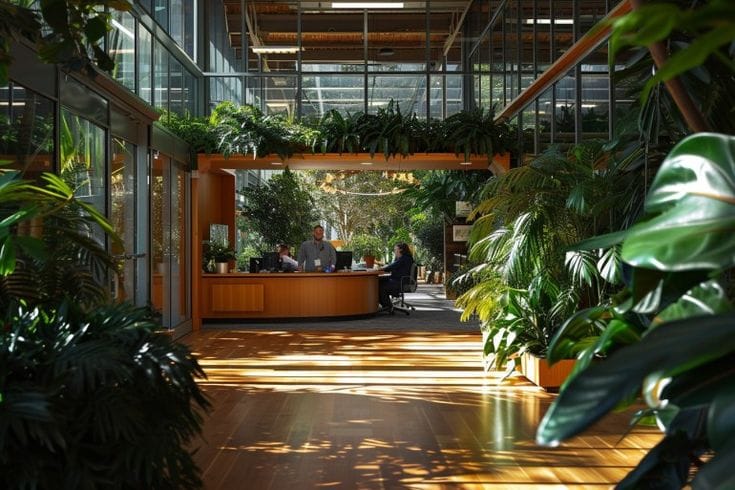
B. Greenery and Living Walls: Incorporate indoor plants, vertical gardens, or atriums. Species like ferns or pothos improve air quality and provide visual relief.
C. Water Features: Fountains or aquariums introduce calming sounds and humidity, mimicking rivers or oceans to soothe nerves.
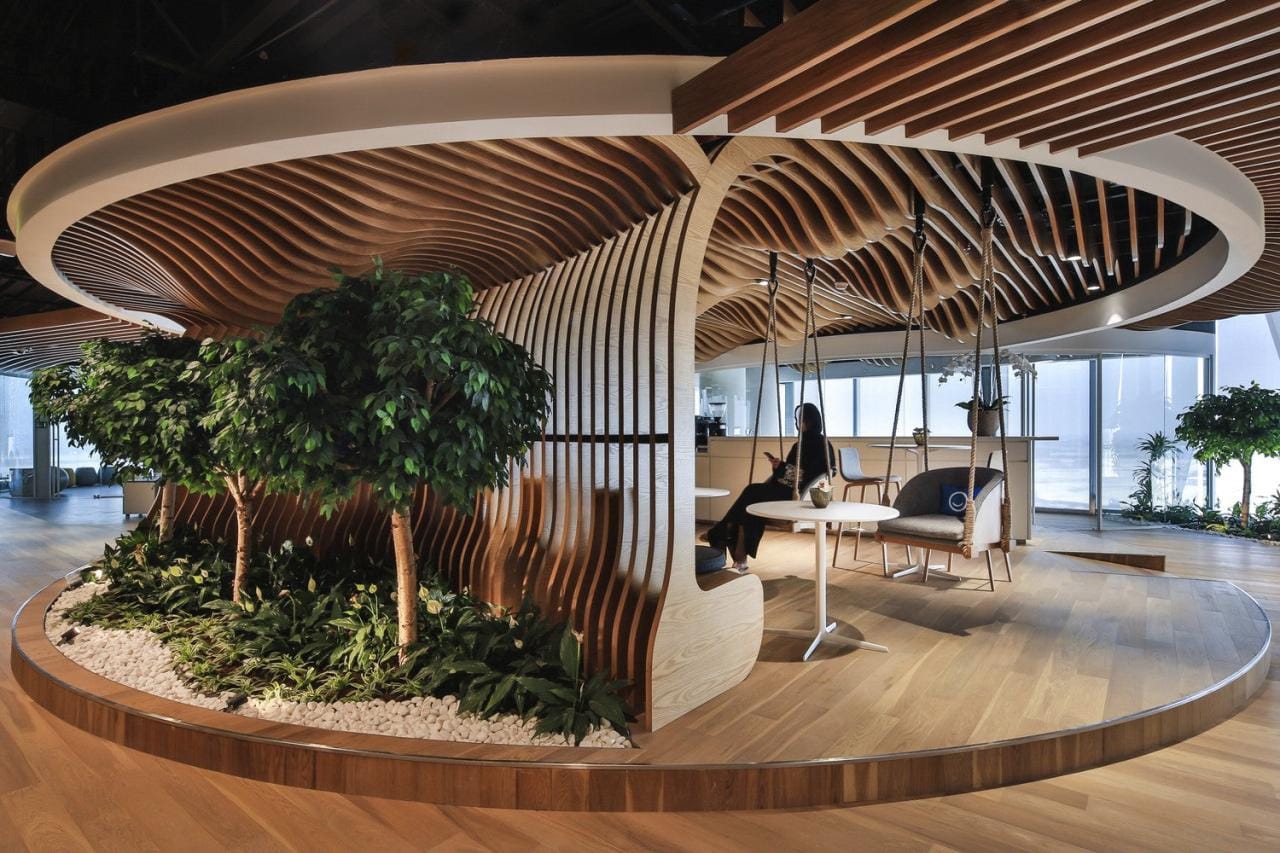
D. Organic Materials: Use wood, stone, bamboo, or cork for furniture and finishes. These evoke tactile connections to nature.
E. Natural Patterns and Shapes: Integrate fractal designs, curves, or botanical motifs in wallpapers, carpets, or art to stimulate subconscious well-being.
F. Sensory Variety: Include scents from essential oils, varied textures, and sounds like bird chirps via audio systems for multisensory engagement.
These elements can be scaled; small offices might start with potted plants, while larger ones build full biomes.
Real-World Case Studies Demonstrating Success
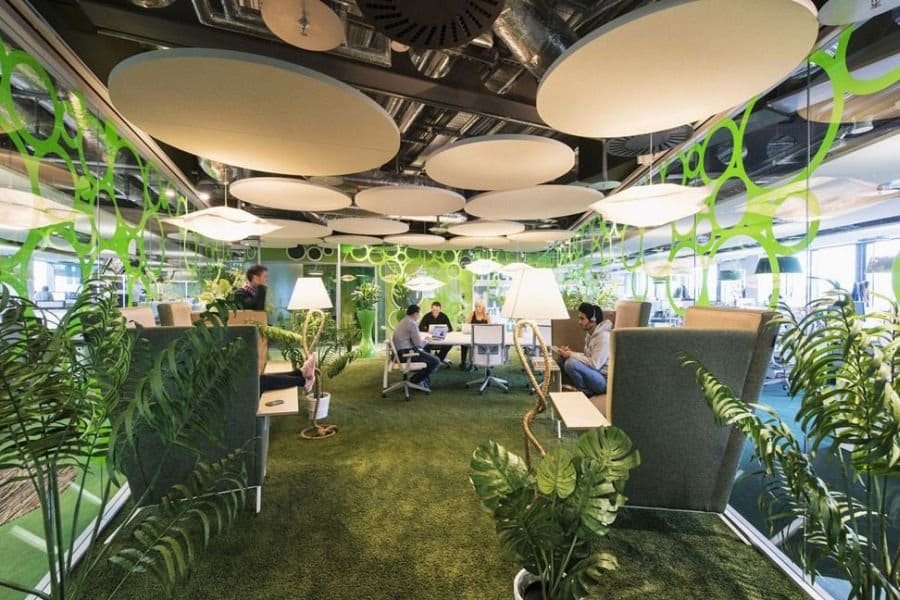
Examining successful implementations highlights biophilic design’s versatility. Google’s London headquarters features “breathing rooms” with moss walls and natural light, resulting in higher employee satisfaction and innovation rates.
Singapore’s Khoo Teck Puat Hospital integrates gardens and water elements, accelerating patient recovery by 20-30% and improving staff efficiency. In residential-commercial blends, Milan’s Bosco Verticale towers host thousands of plants, reducing urban heat and enhancing resident productivity.
The Vibe Office in Dubai uses bamboo shades and multi-zonal gardens, cutting energy use while boosting worker focus. Scotland’s Ruins Studio repurposes old structures with natural integrations, showing cost-effective retrofits.
These cases underscore that biophilic design adapts to various scales, yielding benefits like reduced crime in green urban areas (savings up to $1.7 billion in New York) and increased foot traffic in vegetated commercial spaces.
Practical Steps for Implementing Biophilic Design
Starting with biophilic design requires assessment and planning. Begin by auditing your space for natural light and ventilation opportunities. Collaborate with architects or designers specializing in sustainable practices.
Budget-friendly options include adding desk plants or nature-inspired murals. For larger projects, invest in green roofs or modular walls. Ensure maintenance plans for living elements to sustain benefits.
Incorporate employee feedback via surveys to tailor designs. Certifications like WELL Building Standard can guide and validate efforts.
Technology aids too: smart lighting that mimics sunlight cycles or apps monitoring air quality.
Overcoming Challenges in Adoption
Despite advantages, barriers exist. Initial costs can be high, but ROI from productivity gains offsets this—often within 2-3 years. Maintenance concerns are mitigated with low-care plants or artificial alternatives.
In dense urban areas, space limitations call for creative solutions like vertical gardens. Resistance from traditional mindsets is addressed through pilot programs demonstrating quick wins.
Regulatory hurdles, like building codes, are navigable with expert consultation. Overall, the long-term savings in health and efficiency make it worthwhile.
Future Trends and Evolving Applications
Looking ahead, biophilic design will integrate with smart tech, like AI-optimized plant systems or VR nature simulations. Hybrid work models will emphasize home-office biophilia, with portable elements.
Sustainability will deepen, using recycled materials and biodiversity-focused designs. Research will expand on psychological impacts, potentially influencing policy for greener workplaces.
In healthcare and education, expect more adoption, with studies showing 55% fewer mental issues in nature-exposed youth. Ultimately, biophilic design represents a shift toward human-centered, eco-friendly spaces that propel business success.
Conclusion
Biophilic design transforms ordinary offices into thriving ecosystems that elevate productivity, health, and creativity. By weaving natural elements into daily work life, companies can foster environments where employees excel. As evidence mounts, ignoring this approach risks falling behind in talent wars. Start small, measure impacts, and scale up—your workforce and bottom line will thank you.