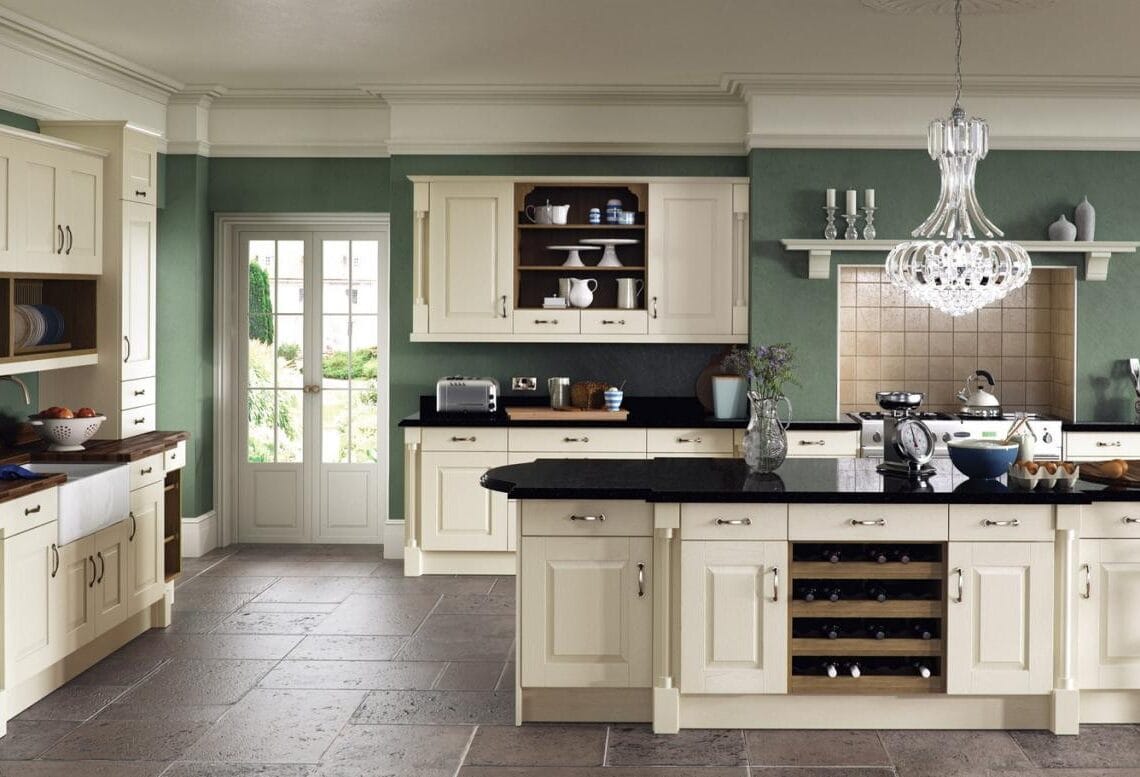
The quintessential English kitchen—long celebrated for its cozy charm, meticulous craftsmanship, and enduring, timeless quality—is undergoing a dramatic and highly sophisticated transformation. Moving away from the bright, airy pastels and light Shaker cabinetry that dominated the last decade, the trend for 2025 is firmly embracing a darker mood aesthetic. This isn’t a return to the heavy, cumbersome kitchens of the past; rather, it’s a refined, deeply luxurious shift toward rich, saturated colors and raw, natural materials. This fusion creates spaces that are simultaneously intimate, intellectual, and incredibly warm.
This emerging style, which can be termed Moody English Heritage, leverages deep greens, moody blues, charcoal grays, and even near-black hues on cabinetry and islands. The darkness is balanced and warmed by traditional architectural elements: exposed wood beams, natural stone countertops, aged brass hardware, and the central, grounding presence of a traditional range or stove set within a bespoke alcove. The result is a kitchen that feels less like a sterile workspace and more like a cherished, lived-in heart of the home, prioritizing comfort and history over clinical minimalism.
For a content writer focused on SEO and maximizing Google AdSense revenue, this niche is particularly lucrative. Keywords such as Dark Kitchen Cabinetry, Natural Stone Countertops, Bespoke Kitchen Design, and English Heritage Style are highly specific and indicate a high purchasing intent, attracting premium advertisers in the custom millwork, luxury appliance, and architectural materials sectors. This article will provide an exhaustive breakdown of the design pillars, essential materials, technological integrations, and strategic lighting techniques necessary to master the art of the Darker English Style Kitchen, ensuring the final result is both aesthetically stunning and commercially valuable.
I. The Philosophical Shift
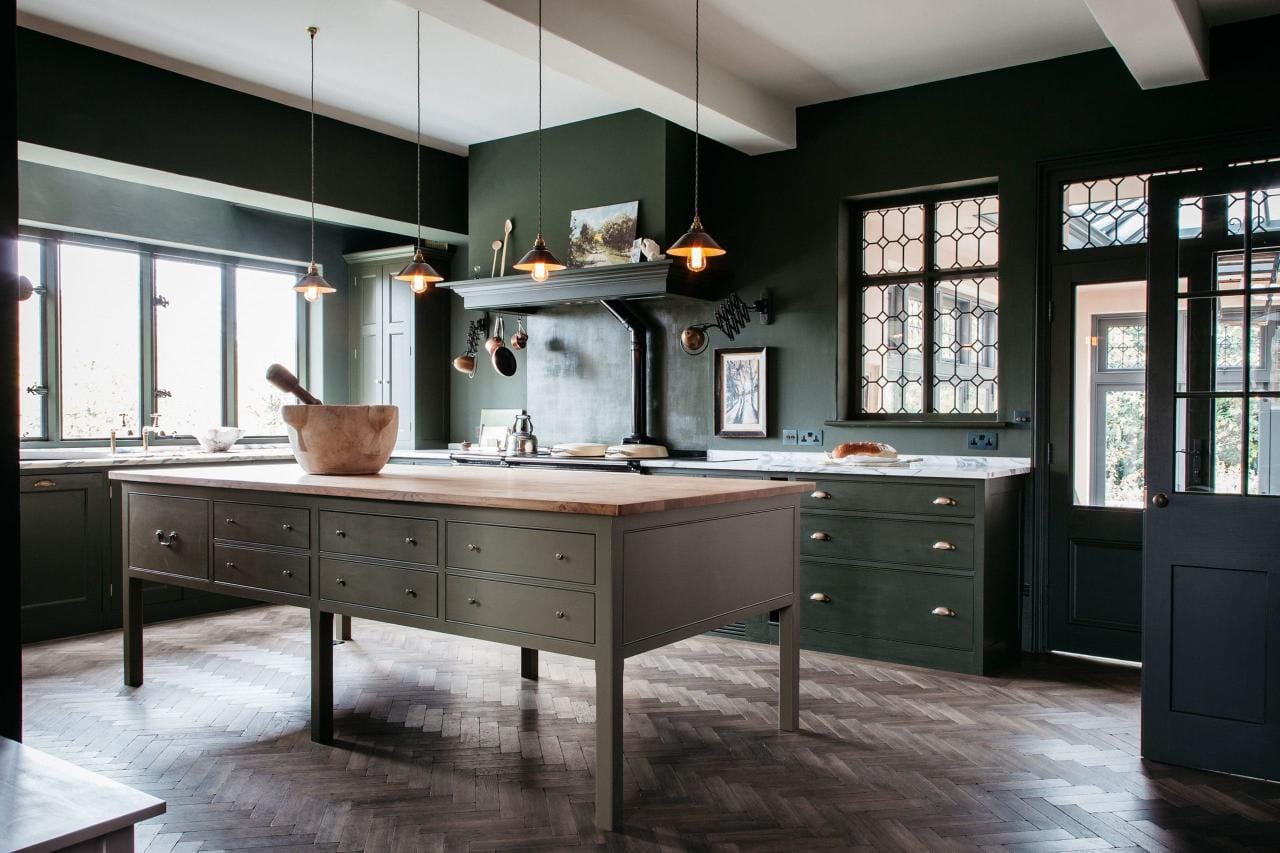
The movement towards darker kitchens reflects a broader cultural desire to retreat from the overly stylized, public-facing spaces and create rooms that feel deeply personal and comforting.
A. The Psychology of Dark Colors
Dark hues inherently carry psychological weight, which, when properly balanced, translates into sophisticated warmth rather than oppression.
A. Intimacy and Enclosure: Darker colors absorb light, visually shrinking a space just enough to make a large room feel more cozy and contained. This sense of enclosure promotes intimacy, making the kitchen a preferred gathering spot.
B. Sophistication and Seriousness: Deep, saturated colors—like forest green, deep navy, and oxblood red—are associated with luxury goods, rich fabrics, and historical libraries. Applying them to the kitchen lends the space a gravitas and sophistication that lighter, airier palettes often lack.
C. Contrast and Artistry: Dark cabinetry serves as a powerful backdrop, allowing lighter elements—such as polished hardware, white porcelain, or even food itself—to stand out in sharp relief. This high contrast highlights the artistry of the kitchen’s contents.
D. Durability Perception: Dark colors are visually grounded and often feel more durable and timeless, aligning with the ethos of English Heritage design, which champions longevity over trends.
B. The Rejection of “All-White” Monotony
The pendulum is swinging away from the dominant “all-white” aesthetic, which, while clean, often fell victim to visual fatigue and standardization.
A. Lack of Personality: The uniformity of white kitchens, often perpetuated by house-flipping and mass media, made them feel generic. Homeowners now seek Personalized Spaces that reflect a unique, collected history.
B. High Maintenance Perception: While light cabinets hide dust, they highlight smudges and spills immediately. Dark, saturated colors are often more forgiving in daily use, paradoxically making the room feel less precious and easier to live in.
C. Embracing Architectural Weight: The Darker English Style champions architectural details—heavy mouldings, exposed beams, and substantial millwork. Dark colors give these elements weight and presence, preventing them from dissolving into a white background.
II. Essential Design Pillars of the Darker English Kitchen
To execute this aesthetic successfully, several key architectural and design elements must be meticulously integrated, moving beyond simple cabinet painting.
A. Rich, Saturated Color Palette
The selection of a deep, complex color is the foundation, chosen to interact dynamically with the available light.
A. Deep Greens: Ranging from muted sage to forest green, this color anchors the room to nature and provides a comforting, organic depth. It pairs exceptionally well with unlacquered brass and light wood flooring.
B. Moody Blues: Think deep indigo, navy, and petrol blue. These colors are classic in English design, offering a calming influence that feels both historical and utterly contemporary.
C. Charcoal and Off-Black: Black is used sparingly to avoid an overly severe look. Instead, deep charcoal or shades of Near-Black (black with a hint of green or blue) offer the dramatic effect without making the space feel oppressive.
B. The Traditional Range Alcove
A defining feature of the English kitchen, the alcove transforms the cooking area into a monumental, hearth-like focal point.
A. Creating a Focal Point: The range cooker (often a commercial-style or AGA-type stove) is recessed into an Arched Alcove or niche, framed by surrounding cabinetry. This gives the appliance the importance of a traditional fireplace.
B. Integrated Storage: The alcove area often incorporates bespoke shelving or spice racks within the frame, making use of the architectural depth. This detail speaks to the Artisanal Craftsmanship expected in this design style.
C. Material Contrast: The alcove’s interior is often clad in a highly textured material, such as brick, matte subway tile, or a polished stone slab, offering a necessary visual break from the dark cabinetry while reinforcing the room’s traditional roots.
C. Inset Cabinetry and Bespoke Joinery
Unlike cheaper overlay cabinets, the Darker English style demands quality construction that signals lasting value.
A. Inset Doors: Cabinets feature doors set flush inside the frame. This requires superior craftsmanship, preventing gaps and warping. This detail is a visual hallmark of Bespoke Kitchen Design and Quiet Luxury.
B. Furniture Detailing: Cabinetry should look less like built-in boxes and more like freestanding pieces of furniture. This is achieved through decorative legs, integrated toe kicks that resemble plinths, and bespoke cornice and light pelmet detailing.
C. Woven and Mesh Fronts: A high-value trend involves incorporating woven cane, rattan, or delicate brass mesh into selected cabinet door panels. This subtle transparency and texture break up large expanses of dark color and adds a sophisticated layer to the design.
III. Materiality and Texture
The darkness of the cabinetry must be counterbalanced by rich, warm, and highly textural materials elsewhere in the room.
A. Countertops and Backsplashes
Natural, durable surfaces are essential to ground the dark colors and provide contrast.
A. Natural Stone: Natural Stone Countertops such as dark, honed soapstone, heavily veined marble (like Calacatta Viola), or muted granite are preferred. Honed finishes absorb light, complementing the moody tone, while marble adds classic, cool contrast.
B. Butcher Block/Wood Accents: Thick butcher block or rich, dark wood is often used on a central island top or a designated baking area. The warm wood prevents the dark room from feeling sterile and provides a soft, tactile surface.
C. Limestone and Earthy Tiles: Backsplashes often feature textured, irregular tiles or slabs of natural Limestone Natural Stone Accents that reflect an organic, European sensibility, adding warmth and texture to the wall plane.
B. Metals and Hardware
Hardware functions as the room’s jewelry, providing small, bright flashes of warmth against the deep colors.
A. Unlacquered Brass: The metal of choice for this aesthetic. Unlacquered brass is designed to patina and age over time, acquiring a unique, dark finish that reflects the kitchen’s history. It beautifully complements deep green and blue cabinetry.
B. Aged or Oil-Rubbed Bronze: For a deeper, more rustic look, hardware in aged bronze is used. The matte, dark finish is subtle against the dark cabinets, reinforcing the monochromatic and sophisticated feel of the space.
C. Traditional Forms: Hardware styles are classic: cup handles, latches, or simple, heavy knobs, which reinforce the enduring English country look.
IV. The Role of Lighting and Technology
Lighting is perhaps the most critical element, as it must skillfully reveal the richness of the dark materials without overwhelming the intimate atmosphere.
A. Layering Light for Warmth
A. Task Lighting: Under-cabinet strip lighting (often warm 2700K LED) is essential for illuminating workspaces without disrupting the overall mood. This is functional and discreet.
B. Ambient Lighting: A statement pendant or Sculptural Lighting Art Piece—often in brass or hand-blown glass—is used over the island or dining table. The light source should be dimmed and warm to enhance the moody atmosphere.
C. Accent Lighting: Small, directional spotlights are used within the open shelving or above the range alcove to graze the textured backsplashes or brickwork, maximizing the visual depth of the Material Drenching Concept surfaces.
B. Seamless Technology Integration
A. Discreet Appliances: Technology should be integrated to be felt, not seen. This includes panel-ready refrigerators, hidden charging stations within drawers, and induction cooktops that vanish into the counter when not in use. This commitment to discretion is a hallmark of true luxury.
B. Smart Ventilation: High-efficiency, low-noise ventilation systems are essential, often concealed within the range alcove chimney breast to preserve the architectural integrity and avoid the visual clutter of a modern hood.
C. Smart Controls: Full integration with a Smart Home system allows the homeowner to adjust the Tunable White lighting, music, and climate, fine-tuning the room’s complex atmosphere with simple voice commands, further enhancing the home’s perceived value and modernity.
V. Strategic Integration and High-Value Appeal
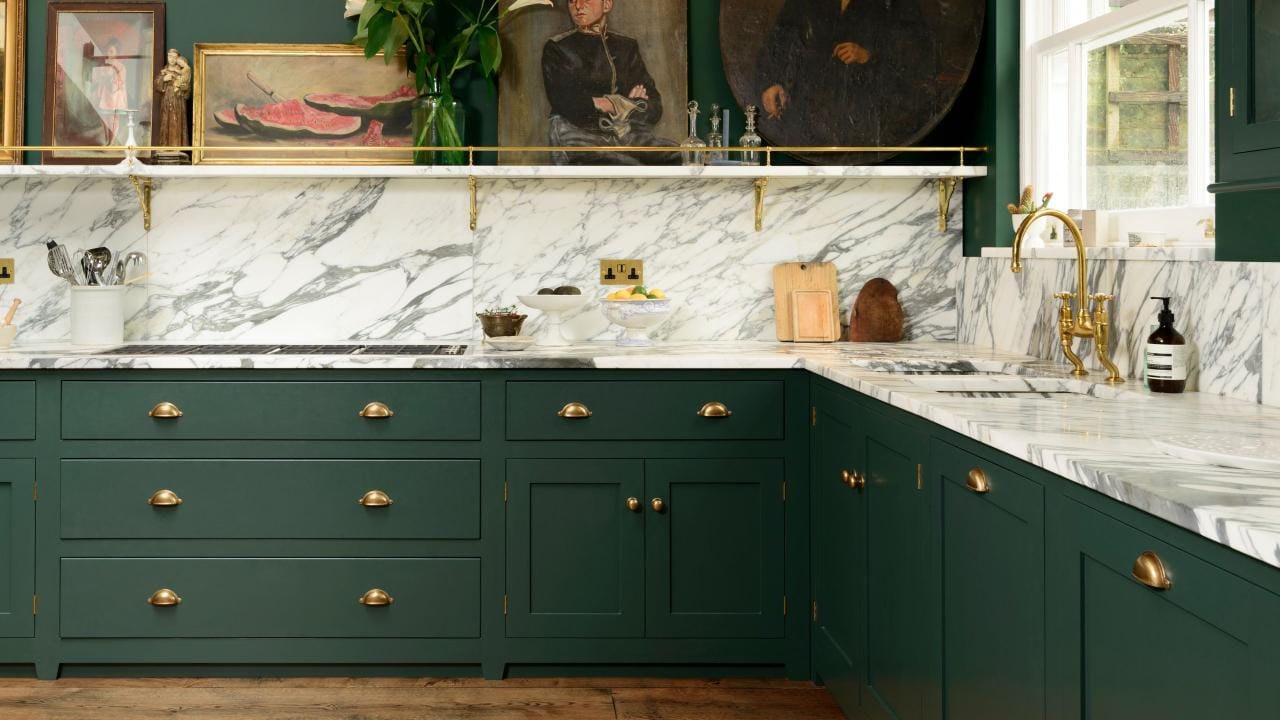
The Darker English Kitchen is an aspirational design choice that speaks directly to the luxury real estate market and demands a high level of craftsmanship, translating into high commercial value.
A. Complementary Design Elements
A. Flooring: The dark cabinetry is best complemented by warm, natural flooring, such as wide-plank, lightly distressed wood (often oak or walnut) or traditional patterned tile (e.g., checkerboard or geometric patterns) to add historical complexity.
B. Plumbing Fixtures: Traditional bridge faucets, pull-down sprayers in complementary metals (aged brass or nickel), and deep fireclay or ceramic farmhouse sinks reinforce the historical, utilitarian English aesthetic.
C. Bespoke Features: High-end kitchens include customized elements like pantry cupboards (often called a ‘larder’), which are large, floor-to-ceiling cabinets with inner drawers and spice racks, or hidden sculleries. These features maximize functionality and signal an exceptional level of Bespoke Kitchen Design.
B. The Commercial Value Proposition
A. Attracting High-CPC Traffic: The cost of materials (custom inset cabinetry, natural stone, unlacquered brass) and the specialized labor required for this design elevate it firmly into the luxury segment. Content focusing on these features draws advertisers willing to pay a premium for high-intent leads—a crucial strategy for maximizing Google AdSense revenue.
B. High Perceived Value: This kitchen style conveys permanence, history, and tailored sophistication. In real estate, it often translates into a faster sale and a higher price point, as it signals that the entire home has been designed with meticulous attention to quality and detail, appealing to the Quiet Luxury consumer.
Conclusion
The Darker English Style Kitchen is a profound and lasting response to the call for authentic, soulful, and intimately designed home spaces. It successfully synthesizes the enduring, handcrafted charm of traditional English cabinetry with a contemporary, moody color palette, resulting in an aesthetic that is rich in history but perfectly suited for 21st-century living. This is more than a color trend; it is a holistic design philosophy that prioritizes warmth, durability, and a collected, time-honored elegance.
The mastery of this style lies in the intentional contrast: deep, saturated cabinetry provides the sophisticated backdrop, while the raw textures of honed Natural Stone Countertops, hand-finished brass, and aged wood floors introduce layers of inviting warmth. Architectural details, particularly the majestic Range Alcove and the precision of Inset Cabinetry, elevate the space from a functional room to a highly customized work of art, signaling an investment in quality craftsmanship over temporary trends.
For the savvy content creator, focusing on the specialized components of this trend—such as the technical aspects of Smart Ventilation, the aesthetic of Woven Cabinet Fronts, and the maintenance of Unlacquered Brass—is key to unlocking high-value monetization opportunities. These niche keywords attract a highly qualified, affluent audience—architects, luxury home builders, and consumers with significant disposable income—who are actively searching for the premium products and services associated with this bespoke design. This strategic alignment between high-cost construction materials and targeted content ensures maximum profitability.
Ultimately, the Darker English Kitchen offers a compelling vision of the future: a space that is technologically advanced yet feels deeply rooted in tradition. It stands as an architectural antidote to the sterile, fleeting nature of fast design, providing a grounding, beautiful, and deeply personal sanctuary that promises to remain stylish and functional for generations. Its enduring appeal guarantees its position as one of the most significant and financially rewarding trends in luxury home design today.